
In today’s fast-evolving business environment, organizations can no longer rely solely on hiring skilled talent. Instead, they must continuously develop their workforce to stay competitive. This is why investing in the right types of corporate training programs has become a strategic necessity rather than an optional initiative.
Moreover, well-designed corporate training programs help organizations improve employee performance, leadership capability, engagement, and retention. Because of these benefits, companies that prioritize training consistently outperform those that do not.
At Career Craft, we help organizations identify, design, and implement training programs that align with real business needs and long-term growth goals.
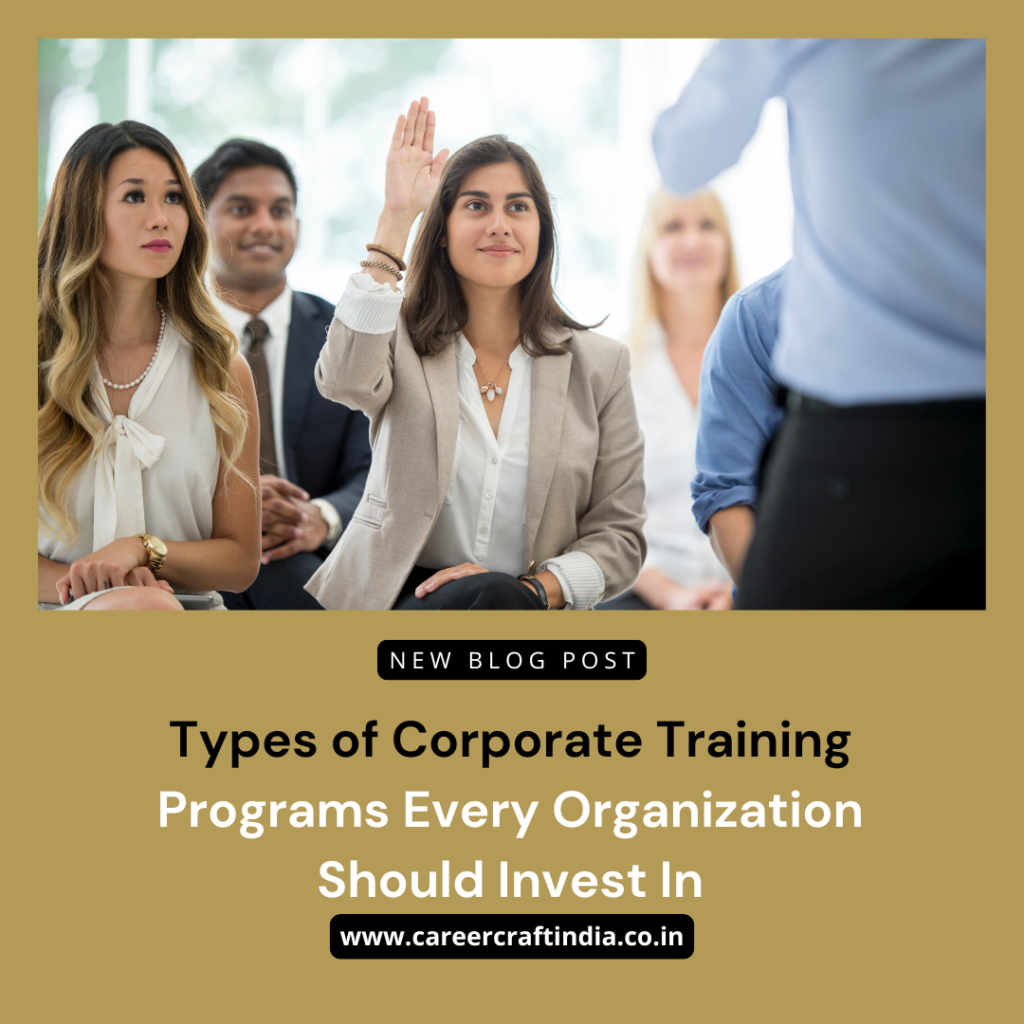
What Are Corporate Training Programs?
Corporate training programs are structured learning initiatives designed to enhance employees’ skills, knowledge, and workplace behavior. These programs focus on both current job requirements and future organizational needs.
In addition, corporate training addresses technical skills, soft skills, leadership development, and compliance requirements. As a result, employees become more capable, confident, and adaptable.
Why Organizations Must Invest in Corporate Training
Modern organizations face rapid technological change, evolving customer expectations, and intense competition. Without continuous learning, employee skills quickly become outdated.
According to McKinsey & Company, organizations that invest in workforce development are better positioned to manage disruption and sustain long-term performance.
Source: https://www.mckinsey.com
Therefore, corporate training is a critical driver of organizational success.
Types of Corporate Training Programs Every Organization Should Invest In
1. Onboarding and Induction Training
Onboarding training helps new employees understand company culture, policies, roles, and expectations. A strong onboarding program improves early engagement and productivity.
Additionally, effective induction reduces employee anxiety and shortens the learning curve. Consequently, new hires integrate faster into the organization.
2. Technical and Job-Specific Training
Technical training focuses on role-specific skills such as software tools, systems, machinery, or industry processes. This type of training is essential for maintaining quality and efficiency.
Moreover, technical upskilling ensures employees remain competent as technologies evolve. As a result, performance and accuracy improve.
3. Soft Skills Training
Soft skills training develops interpersonal abilities such as communication, teamwork, emotional intelligence, and problem-solving. These skills are essential for collaboration and leadership.
Because technical skills alone are not enough, organizations that invest in soft skills training build stronger and more effective teams.
4. Leadership and Management Development Programs
Leadership training prepares employees for supervisory and managerial roles. These programs focus on decision-making, people management, delegation, and strategic thinking.
As leadership pipelines strengthen, organizations ensure continuity and long-term stability.
5. Compliance and Safety Training
Compliance training ensures employees understand legal, ethical, and regulatory requirements. Safety training reduces workplace risks and promotes a secure environment.
Therefore, this type of training protects both employees and the organization from legal and operational issues.
6. Sales and Customer Service Training
Sales and customer service training helps employees interact effectively with clients and customers. These programs improve communication, negotiation, and relationship-building skills.
As a result, customer satisfaction and brand reputation improve significantly.
7. Time Management and Productivity Training
Productivity training helps employees manage time, prioritize tasks, and reduce workplace stress. In today’s demanding work environment, these skills are increasingly important.
Consequently, employees work more efficiently and maintain better work-life balance.
8. Digital Skills and Technology Training
As organizations adopt digital tools, employees must keep up with new technologies. Digital training focuses on data tools, automation, AI basics, and digital collaboration platforms.
Because of digital transformation, this training is essential for future readiness.
9. Diversity, Equity, and Inclusion (DEI) Training
DEI training promotes respect, inclusivity, and cultural awareness in the workplace. It helps employees understand diverse perspectives and reduce bias.
As a result, organizations build healthier and more collaborative work cultures.
10. Continuous Learning and Upskilling Programs
Continuous learning programs encourage ongoing skill development rather than one-time training. Employees regularly update their knowledge through workshops, microlearning, and coaching.
Therefore, organizations remain agile and competitive in changing markets.
How to Choose the Right Corporate Training Programs
Not all organizations require the same training mix. Choosing the right programs depends on business goals, industry requirements, and workforce skill levels.
Key factors to consider include:
- Current skill gaps
- Future business strategy
- Employee roles and responsibilities
- Performance challenges
A structured training needs analysis helps organizations make informed decisions.
Role of Customized Training Programs
Generic training often fails to address real workplace challenges. Customized corporate training programs focus on specific organizational needs and employee roles.
At Career Craft, we design customized programs that deliver measurable performance improvement.
Learn more about us:
👉 https://careercraftindia.co.in/about.php
Explore our corporate training solutions:
👉 https://careercraftindia.co.in/programs.php
Benefits of Investing in the Right Corporate Training Programs
- Improved employee performance and productivity
- Stronger leadership pipeline
- Higher employee engagement and retention
- Better adaptability to change
- Sustainable organizational growth
Because of these benefits, training investments deliver long-term value.
Future of Corporate Training Programs
The future of corporate training is digital, personalized, and data-driven. Organizations are moving toward blended learning, microlearning, and continuous upskilling models.
For this reason, companies must evolve their training strategies to remain competitive.
Frequently Asked Questions (FAQ)
What are corporate training programs?
They are structured learning initiatives designed to improve employee skills and workplace effectiveness.
Why are different types of corporate training important?
Different programs address different skill needs, from technical expertise to leadership development.
Which corporate training program is most important?
The most important program depends on organizational goals and workforce needs.
How often should corporate training be conducted?
Training should be continuous to keep skills relevant and updated.
How does Career Craft support corporate training?
Career Craft offers customized training programs aligned with business objectives.
Invest in the Right Corporate Training with Career Craft
Choosing the right types of corporate training programs is essential for building a skilled and future-ready workforce. With the right strategy, training becomes a powerful driver of performance and growth.
Visit our website:
👉 https://careercraftindia.co.in/
Read more insights on our blog:
👉 https://careercraftindia.co.in/blog/
For customized corporate training solutions, contact us today:
👉 https://careercraftindia.co.in/contact.php